
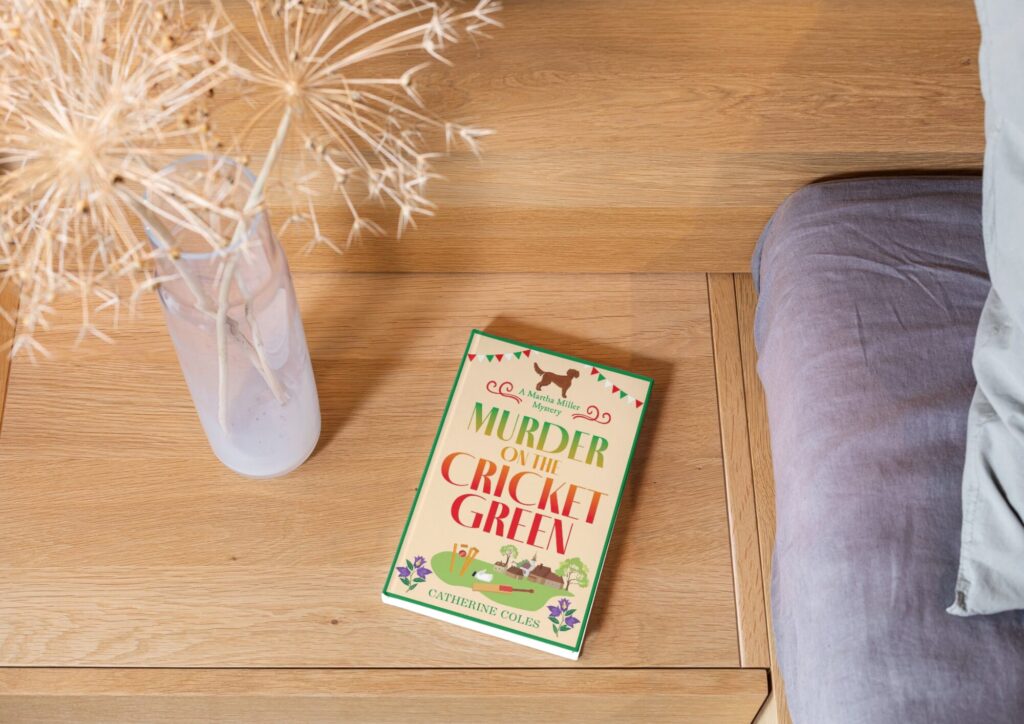
There’s something deceptively peaceful about an English village cricket match.
The white clothing. The polite applause. The sense that nothing truly terrible could happen on a neatly trimmed green, under a mild May sky. And yet, for a mystery writer, that’s precisely what makes a setting like that irresistible.
That contrast — order and chaos, civility and unexpected death — is where Murder on the Cricket Green really begins.
A village ready to move on
Westleham Village, in May 1948, is still finding its feet after the war. People are trying to return to routines that were once normal. The first village cricket match since the war’s end isn’t just a sporting event — it’s a symbol. A statement that life, at last, is resuming.
But villages remember. And they keep secrets.
I wanted to write a story where the past refuses to stay buried, even as people are determined to look forward.
The most unsettling return of all
At the heart of the story is Martha Miller, a woman whose life has already been quietly reshaped by loss. Her husband, Stan, has been missing for two years — long enough for grief to soften into something more complicated. Long enough for new feelings to begin to grow.
So when Stan suddenly reappears, it isn’t relief that Martha feels – it’s unease.
What does someone bring back with them after two missing years? And what happens when the answers are things no one wants to hear?
Murder in plain sight
When Stan collapses at the cricket match, surrounded by neighbours and friends, there’s no dark alley or locked room to hide behind. The crime happens in full view of the entire village — and, naturally, suspicion settles quickly on Martha.
That choice was deliberate. I wanted a mystery where the danger isn’t just about uncovering the killer, but the village and its inhabitants. In a place this small, everyone is watching. Everyone has an opinion. And everyone, it seems, has something to hide.
A cosy mystery — with consequences
I love cosy mysteries for their sense of place and community. This is a story with warmth and amateur sleuthing, yes — but it’s also about trust, reputation, and the cost of knowing the truth.
If you enjoy village mysteries with emotional stakes, complicated relationships, and a murder that disrupts far more than the afternoon’s play, I think you’ll feel at home in Westleham.
The investigation is about to begin — and not everyone will make it to tea.